If you've been staring at your screen wondering whether you need a save-the-date website, a wedding website, or both, take a breath, lovely. You're not behind, and you're not overthinking it. This is one of those early questions that sounds tiny and then quietly eats a whole evening, because every option looks a little the same and nobody actually stops to explain the difference.
So here's the difference, explained properly. And I promise it's simpler than the internet is making it feel.
A save-the-date website is your early heads-up. A wedding website is the fuller version with everything your guests need later. One holds the weekend. The other holds the plan. You'll likely use both, at different moments, and neither one has to cost a fortune or swallow your weekends to pull off.
Let's slow it down.
The short version, so you can close this tab and breathe
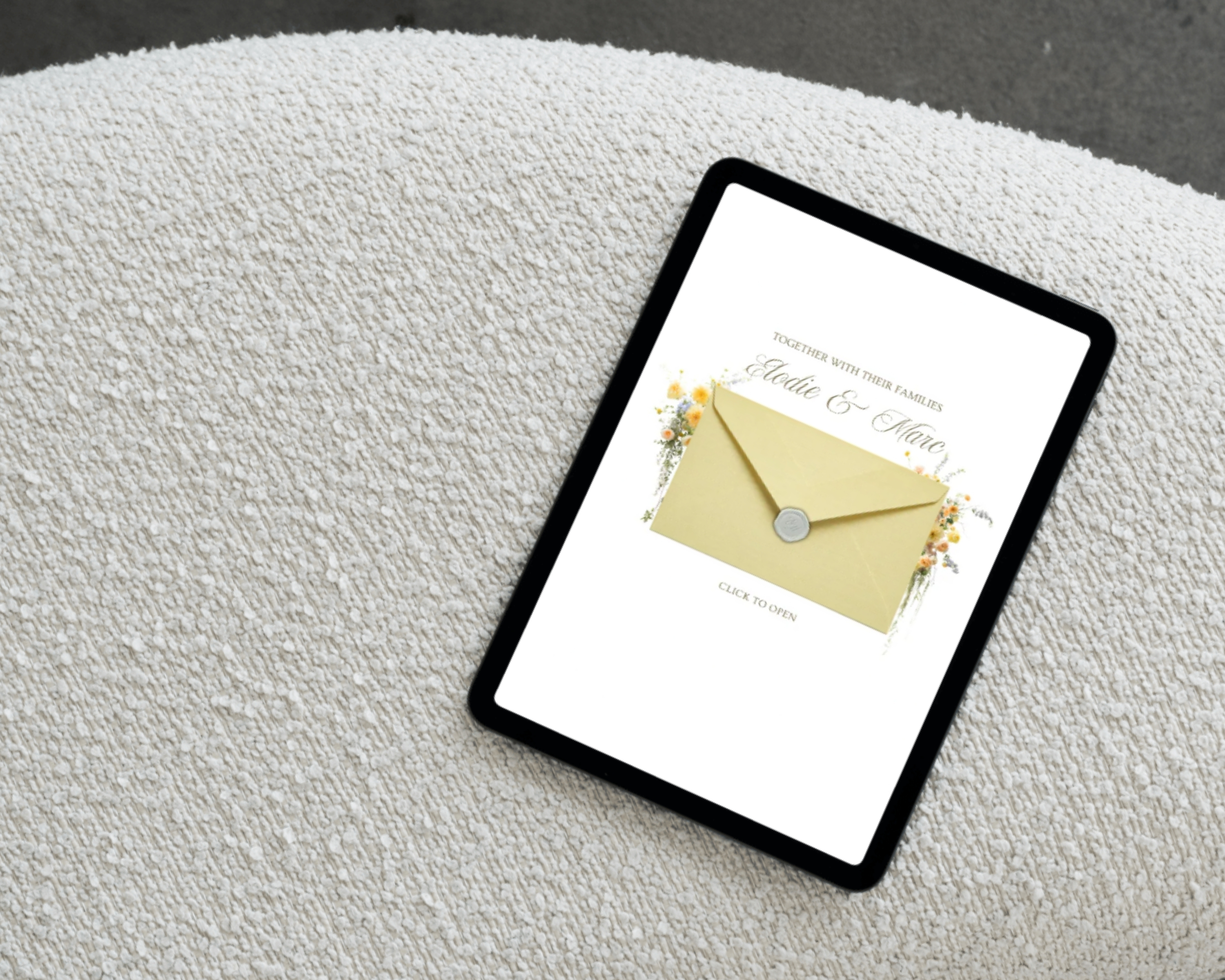
A save-the-date website comes first, and it does one job: tells people your date and where, early enough that they keep the weekend open. It's light. It's a soft launch.
A wedding website comes later, and it does the heavy lifting: schedule, RSVP, travel, registry, dress code, all the questions you don't want to answer one text at a time.
Most couples send the save-the-date around eight to twelve months out, then share the full website closer to invitations. Same two people, same beautiful design, two different moments on the calendar. That's really it. Everything below is just the useful detail.
What a save-the-date website actually is
Think of it as the announcement, made a little more special than a group text and a lot easier than printing and posting a stack of cards.
It's a single page you can share with a link. It says who's getting married, the date, the city or venue, and a warm line or two for your people. Some couples add engagement photos or a countdown. A few quietly use it to gather mailing addresses early, so that when it's time for printed invitations later, they're not chasing everyone in the group chat. That's the whole point of it: get the date into people's calendars now, look lovely doing it, and buy yourself time before the full details are ready.
What it's not is the place for every logistic. It's not trying to answer the hotel question or hold your RSVPs. It's the opening note, not the whole song.
Here's the part that saves you the blank-screen panic. The wording. Steal one of these and change two words:
Classic and timeless
Save the date. [Name] and [Name] are getting married on [Date] in [City]. We'd love for you to celebrate with us. A formal invitation, with all the details, will follow.
Warm and casual
We're getting married! 🤍 [Name] and [Name] — [Date], in [City]. Keep the weekend free. The good stuff — where to stay, what to wear, how to RSVP — is on its way to you soon.
Destination or long-distance
Pack a bag — we're getting married in [City, Country] on [Date]. We wanted to give you plenty of notice so you can plan the trip with us. Full travel details to come. With love, [Name] and [Name]
If most of your crowd is traveling, or you're planning through a busy season, the save-the-date website earns its keep the most. It gives people real notice without forcing you to lock every detail before you're ready. For the full timeline of what goes out when, this wedding stationery timing guide walks through the whole sequence.
What a wedding website is (and what it holds)
If the save-the-date website is the "mark your calendar" moment, the wedding website is the "here's everything you need" home.
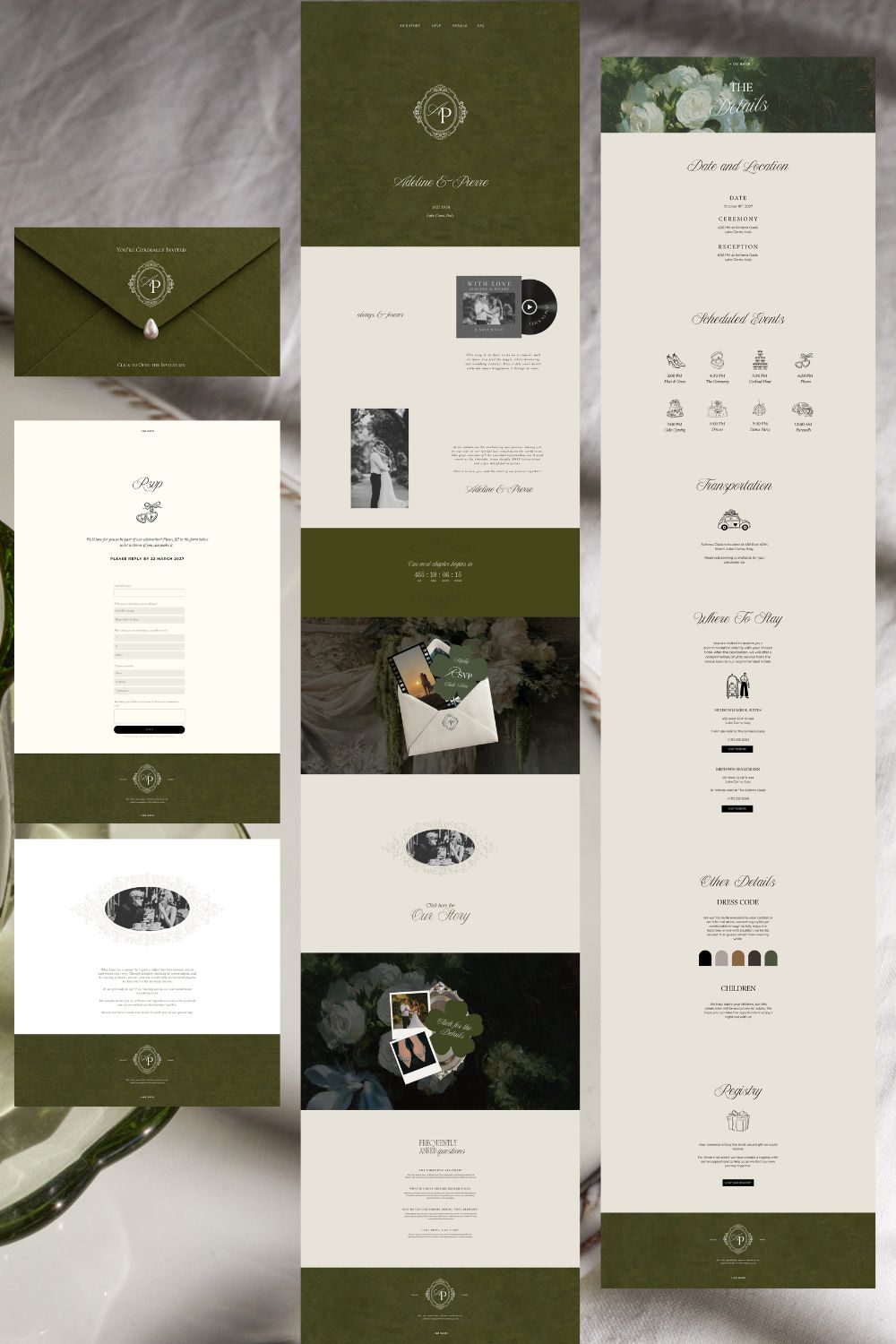
This is where guests land when they're actually getting ready to come. It holds your story, the schedule, the RSVP, travel and hotel notes, the dress code, your registry, and an FAQ for the questions that would otherwise arrive at 11pm on a Tuesday. One link, and suddenly you're not the human help desk for forty people.
That's the real gift of it, honestly. Instead of five separate texts with a map, a hotel name, a "what should I wear," and a "are kids invited," everything sits in one calm place you update once. Change the shuttle time, and it's changed for everyone.
A few of the pages do quiet, heavy work:
- The RSVP. This is the one that saves your sanity. Guests reply in one place, and you stop counting heads by hand. If you want to see how that flows without annoying anyone, here's how to collect RSVPs online.
- Travel and dress code. The two questions guests ask most, answered before they think to ask.
- FAQ. Where "is there parking" and "can I bring a plus-one" go to rest.
Not sure what to actually write on each page? This page-by-page guide to your wedding website hands you the wording for all of it, so you're never starting from an empty box.
The real difference, in one line
They're related, but they're not the same thing, and the difference isn't really about which one is prettier. Both can be beautiful. It's about how much each one needs to do.
A save-the-date website is earlier, simpler, and lighter. It makes an impression, shares the headline, and gives people a link to hold onto. A wedding website is fuller and works harder. More pages, more answers, the RSVP, the running list of everything guests need all the way to the day.
Put simply: the save-the-date shares the essentials first. The wedding website takes over once people start planning to attend.
There's an older cousin to this question worth a look too, if you're weighing digital against printed pieces: wedding website vs. paper invitations. Same spirit — you usually don't need to choose as hard as it feels.
Which one do you need first?
For most couples, the answer is genuinely simple.
Start with the save-the-date website if you're early in planning and mostly have the big rocks, the date and the city, but not the fine print yet. Get the notice out, keep the weekend claimed, and build the rest later.
Go straight to the wedding website if your details are mostly settled and you're close enough that guests need the practical stuff now. There's no rule that says you have to send a separate save-the-date at all. Plenty of couples with a shorter runway skip it and lead with the full site instead.
And if your wedding is a destination, lands in a packed season, or has a lot of people traveling, send the save-the-date website early no matter what. Notice is the kindest thing you can give a guest who has to book flights.
There's no wrong answer here, loves. It comes down to timing and how much you've nailed down.
When each one goes out
A quick rhythm, so the calendar stops feeling like a mystery:
- Save-the-date website: roughly eight to twelve months before the wedding. Sooner for destinations, holiday-weekend dates, or crowds that need to travel.
- Wedding website: ready before or alongside your invitations, usually around six to eight weeks out — though there's no harm in publishing it earlier and adding pages as plans firm up.
That last part matters more than it looks. Your website doesn't have to arrive finished. You can put up the basics, share the link, and keep filling it in as the venue confirms the shuttle and the registry comes together. It grows with you.
The part nobody tells you: it can feel like one thing, not two projects
Here's where the "do I need both?" worry usually comes from. It sounds like two websites, two builds, two more things to learn at 10pm when you're already tired. Two more ways for it to look a little cheap, or a little off.
It doesn't have to be that.
The save-the-date website and the wedding website can be the same design: the same colors, the same feel. What your guests get is one cohesive world that unfolds over time. The save-the-date sets the tone. The wedding website continues it. To your people, it reads as one beautiful, considered thing, not a first draft followed by a real one.
That's the whole idea behind our matching sets. Our save-the-date website templates and our wedding website templates come in the same designs, Dusty Blue, Old Money, Amalfi Coast, and the rest, so you choose your look once and carry it all the way through. Pick Dusty Sage for your save-the-date, and your full site quietly speaks the same language months later. Both are editable in Canva, both are yours to adjust, and together they still land for about the price of a couple of paper invites. If you'd rather have every piece in one place, the All-Access Wedding Suite holds the whole set.
And if the fuller site is the part that's making you nervous, it's a smaller lift than it looks. Plenty of couples put theirs together in a single evening — swap the words, drop in your photos, publish.
So, do you really need both?
Usually, yes — but not at the same time, and not as two separate headaches.
The save-the-date website helps guests mark the date. The wedding website helps them actually show up prepared. One opens the door; the other walks them through it. Start with whichever one your guests need from you right now, and let the second follow when it's time.
If all you want right now is for people to hold the weekend, begin with a save-the-date website. When they need the full picture, RSVP and travel and the works, the wedding website is where you send them. Somewhere in between? Pick the design you love, publish the simple version first, and let it grow into the full site as your plans do.
Beautiful was never meant to be reserved for big budgets, and organized was never meant to cost you every weekend. You can have both, on your timeline, in your voice — and no one will ever guess how easy it was.
Whenever you're ready, your matching save-the-date and wedding website designs are here. No rush. Just here. 🤍