Let's be honest: the registry page might be the one part of your wedding website that makes you want to close your laptop and walk away. Because asking people for gifts — even when it's completely expected and totally normal — still somehow feels weird to write about yourself.
You don't want to come across as greedy. You don't want to sound demanding. But you also really, really need new towels. Or, you know, money toward your honeymoon.
Here's the good news: there's a way to write your registry page that feels warm, gracious, and totally you — and your guests will actually appreciate the clarity. Let's walk through exactly how to do it.
Why Your Registry Page Actually Matters

Before we get into the wording, let's talk about why this page deserves a little effort. Your registry page isn't just a list of links dumped onto a screen. Done well, it sets the tone for how your guests feel about giving — and it can prevent a lot of "wait, where are they registered?" texts to your mom.
Guests want to give you something you'll love. They're already rooting for you. A clear, gracious registry page makes the whole experience easier and more meaningful for everyone involved.
And if you've opted for cash gifts, a honeymoon fund, or contributions to an experience rather than physical gifts? That's where good wording becomes essential. People need a little context and a lot of warmth before they feel comfortable clicking "contribute."
Start With a Short, Personal Intro
Don't just paste in your registry links with zero context. A two or three sentence intro goes a long way toward making this page feel human instead of transactional.
Here are a few sample intros you can customize:
Option 1 (warm and low-pressure):
"Your presence at our wedding is the greatest gift we could ask for. For those who'd like to celebrate with a gift, we've put together a registry of things we genuinely love — plus a few ways to contribute to experiences we're so excited about."
Option 2 (casual and lighthearted):
"We've spent way too much time debating whether we really need a salad spinner (the jury is still out). But we've finally got a registry together, and we're so grateful for your generosity. No pressure — just lots of love either way."
Option 3 (for couples who've lived together a while):
"Since we've been living together for [X] years, we already have most of the basics covered. Instead of traditional gifts, we've focused our registry on upgrading a few things we love and experiences we can't wait to share."
Pro tip: Keep this intro short. Three sentences max. Your guests are here for the links, not an essay — but they do appreciate the human touch before they get there.
How to List Your Registries
If you're registered at one or two places, this part is simple. But even a clean list of links benefits from a little context. Instead of just saying "We're registered at Target," add one line about why you chose it or what kinds of things guests can find there.
Here's a sample format:
"Williams-Sonoma — For the kitchen things we've been waiting to upgrade. Think: a good Dutch oven, a coffee setup we're actually excited to use, and the kind of knives that make cooking feel like less of a chore."
"Target — A mix of home essentials, a few fun things, and plenty of options at every price point. This is a great place to start if you're not sure what to get."
That's it. A name, a link, and one sentence of context. It makes the whole page feel considered rather than copy-pasted.
The Honeymoon Fund: How to Ask Without Feeling Weird

Okay, this is where people really get stuck. Asking for money — even for something as exciting as a honeymoon — can feel uncomfortable. The key is framing it around the experience you're saving for, not the dollar amount.
Here's what works:
Lead with the dream. Tell people what the fund is for specifically. "We're saving for two weeks in Italy" hits differently than "we'd like cash gifts." One is an invitation to share in something exciting. The other sounds like a bill.
Keep it optional. Always, always make it clear that physical gifts are equally welcome. Nobody should feel like cash is the only acceptable option.
Add a little personality. This is your honeymoon. If you're planning to eat your way through Japan or hike something embarrassingly ambitious in Patagonia, say so. People love contributing to something they can picture.
Sample wording for a honeymoon fund:
"For our honeymoon, we're headed to Portugal — and we cannot wait. We're dreaming of slow mornings with pastéis de nata, long dinners with good wine, and a lot of wandering around cities we've never seen before. If you'd like to contribute to the adventure, our honeymoon fund is linked below. Every little bit goes directly toward making the trip as magical as we're hoping it'll be. And truly, your presence at our wedding means more to us than any gift."
Sample wording for a more general cash/experience fund:
"We've been lucky enough to build a home together over the past few years, so we have most of the essentials covered. What we're really dreaming of now are experiences — travel, a cooking class we keep putting off, a weekend away. If you'd like to give a gift, contributions to our experience fund are so appreciated. We'll think of you every time we go somewhere new."
Pro tip: If you're using a platform like Zola or Honeyfund, include a short note about how it works. Some guests — especially older relatives — may be unfamiliar with digital contribution platforms, and a quick "it's simple and secure, just like online shopping" can go a long way.
How to Handle the "No Gifts, Please" Page
Some couples genuinely don't want gifts. Maybe you're trying to keep things simple, or you're donating to charity in lieu of presents, or you just don't have space for anything new. That's completely valid — and it deserves its own page that's written with care.
The key here is being clear without being preachy about it. You don't want guests to feel scolded for wanting to give you something. And you'll probably still get gifts no matter what you write — people love giving — so have a gracious fallback ready.
Sample wording for no gifts:
"Honestly? Your presence at our wedding is all we need. We mean that. If you'd still like to do something, a donation to [charity name] in our honor would mean the world to us — it's a cause close to our hearts. But please, no obligation. Just come, celebrate with us, and have a great time."
Sample wording if you're donating to charity:
"In lieu of traditional gifts, we're asking guests who'd like to give to make a donation to [charity name]. [One sentence about why this cause matters to you.] We'll have a donation link below if you'd like to contribute — and we'll be sharing updates after the wedding on how much we raised together."
What to Write If You Have Multiple Registries
If you're registered at three or more places, a little organization goes a long way. Consider grouping them by category or giving guests a quick guide to where to start.
Sample wording for multiple registries:
"We know three registries sounds like a lot — here's a quick guide to make it easy. Crate & Barrel is where you'll find our kitchen and dining wishlist. REI is for the outdoor adventures we're always planning. And our Zola registry has a little of everything, including our honeymoon fund. Start wherever feels right for you."
That framing makes it feel curated, not overwhelming.
A Note on Wording Around Price Points
You don't need to explicitly call out prices on your page — that can feel a little awkward. But you can naturally signal range by how you write about your registries. Phrases like "something for every budget" or "plenty of options at every price point" do the work without making anyone feel self-conscious.
You can also gently mention that groups of people can pool together for bigger items if you have a few higher-ticket things on your list: "Some of our larger items are great for group gifting if you'd like to go in with friends or family."
What to Include at the Bottom of the Page
After your registries are listed, close the page with one warm sentence. Don't just let it end with a list of links. Something like:
"We're so grateful for the love and support that's surrounded us through this whole planning process. However you choose to celebrate with us, it means everything."
Or, if you want to keep it light: "Now stop stressing about what to get us and just come ready to dance."
A small closing line makes the page feel complete and leaves guests feeling good.
Making It All Look as Good as It Reads
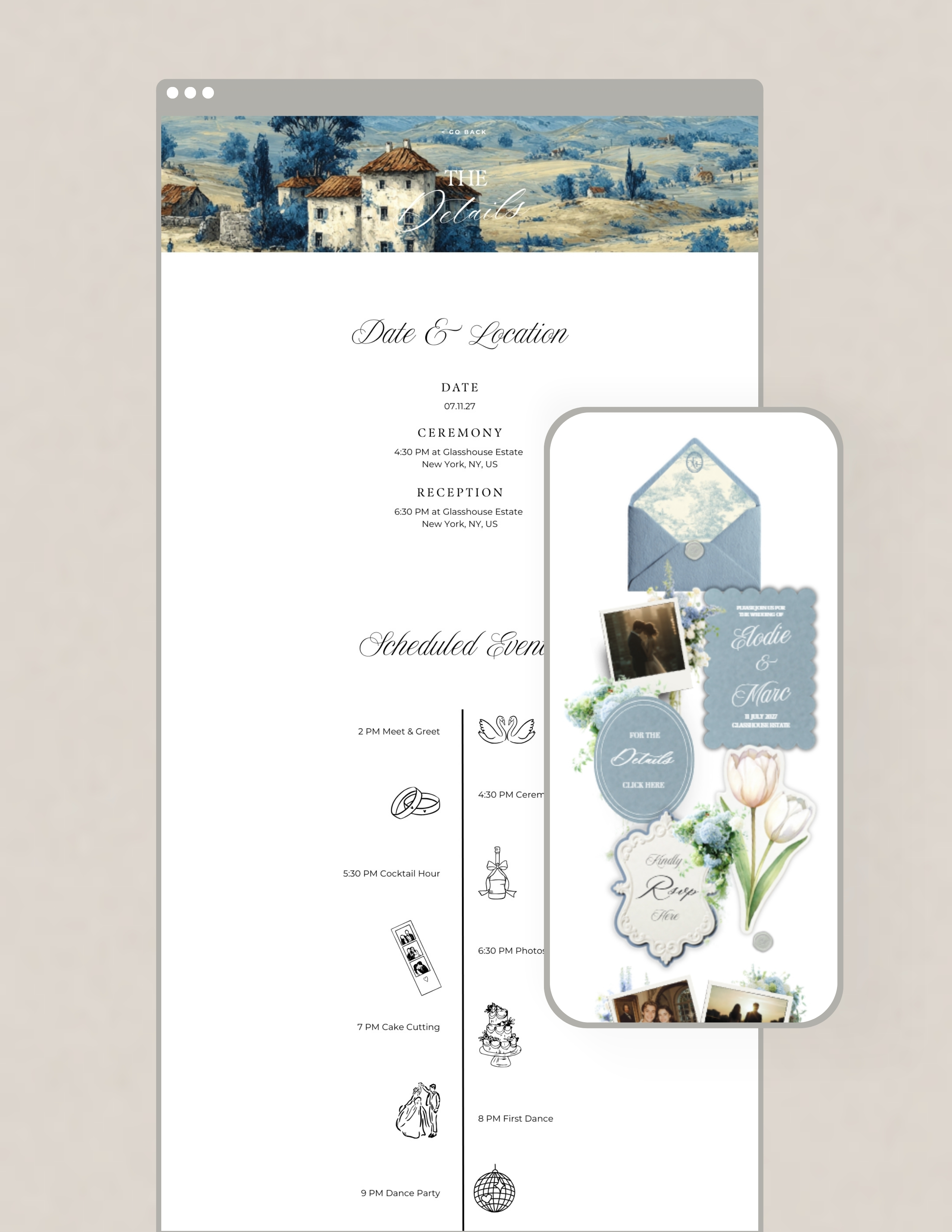
Here's the thing: you can have the most beautifully written registry page in the world, but if it looks clunky or mismatched from the rest of your wedding website, it loses some of its impact. Your guests will notice — even if they can't quite articulate why — when a page feels polished versus thrown together.
If you're building your wedding website from scratch, getting the design right can take almost as long as writing the content itself. That's where a good template makes a real difference. Our templates come with a dedicated registry page already built in, formatted to look beautiful and easy to read, so you can focus on personalizing your words instead of fiddling with fonts and layout.
Check out our templates to find one that matches your vibe — and get your registry page up faster than you think.