You chose an intimate wedding for a reason.
Maybe it was the budget. Maybe it was the anxiety of imagining 150 people staring at you as you walk down the aisle. Maybe it was just that the two of you looked at each other and said, "We want the people who actually know us, and nobody else." Whatever brought you here, micro weddings are having a full moment — and honestly, they're kind of perfect.
But here's something nobody tells you about small weddings: the logistics don't get smaller. If anything, they get more specific. With 20 or 30 guests instead of 150, every single person matters, every detail gets noticed, and there's absolutely no hiding behind a sea of tables if something goes sideways.
That's exactly why your wedding website matters more for a micro wedding than it does for a big one. When your guest list is tight, communication has to be airtight. Your website is how you set the tone, answer the questions, and make sure everyone shows up exactly the way you're envisioning.
Here's everything it needs.
Set the Tone Right at the Top
The very first thing your homepage copy needs to do is signal what kind of event this is. Micro weddings often have a different energy — more intimate, more personal, sometimes more casual, sometimes even more elevated than a big ballroom affair. Whatever your vibe is, let your homepage reflect it from the first sentence.
If your wedding is intimate and cozy, say so. Something like: "We're keeping it small and intentional — just the people we love most, celebrating somewhere that means something to us." That one sentence does a lot of work. It tells guests this isn't a loud, chaotic party. It manages expectations. And it makes people feel genuinely included rather than like a headcount.
If your micro wedding is on the more formal or luxurious end — say, a private dinner at a gorgeous restaurant or a ceremony in a vineyard — your homepage tone should match that elegance. "We're celebrating our wedding with an intimate dinner for our closest people. We can't wait to share this evening with you."
Pro tip: For micro weddings, your homepage is also a great place to include a short, warm note directly to your guests. Something like, "If you're reading this, it's because you mean a lot to us — and that's the whole point." It sounds small, but guests remember that kind of thing.
Be Crystal Clear About the Guest List Situation
This one feels awkward to write, but skipping it creates way more awkward moments later. If your guest list is intentionally limited — no plus-ones, no children, or a strict count — you need to address it directly on your website.
You don't have to make it a big deal. Keep it warm and matter-of-fact. Here's some wording that works:
"Because we're keeping our ceremony and dinner intimate, we're only able to accommodate the guests listed on your invitation. We hope you understand and appreciate you being part of our small, special day."
Or, if children specifically are the conversation: "Our wedding is an adult-only celebration. We know that takes some extra planning, and we truly appreciate you making it work to be there."
Getting this on your website early means you're not fielding awkward phone calls later. It also gives guests the information they need to make arrangements — babysitters, travel, all of it — without having to ask.
Your Venue Section Needs More Detail Than Usual
Here's the thing about micro weddings: they're often held in non-traditional venues. Private homes, rental cottages, restaurant private dining rooms, rooftop terraces, farms, art galleries. These places are beautiful and meaningful, but they're also often hard to find, hard to park near, and unfamiliar to anyone who hasn't been there before.
Your venue section needs to be genuinely helpful, not just pretty. Include the full address (obviously), but also add context. Is parking limited? Say how many spots are available and whether street parking is an option. Is the venue accessed through a gate or a side entrance? Say that. Is it a private property where guests shouldn't arrive early? Mention it.
This kind of detail is especially important if any of your guests are traveling from out of town. They don't know the neighborhood. They don't know that the driveway looks like a private road. They don't know that cell signal is patchy and they should download offline maps before they come.
Sample wording: "Our ceremony will be held at [Venue Name], located at [Address]. Parking is available in the lot directly across the street — there are about 15 spots, so carpooling is a great idea. The entrance is through the garden gate on the left side of the building. Please plan to arrive between 3:45 and 4:00 PM; the ceremony begins promptly at 4:15."
Pro tip: For venues with tricky navigation, embed a Google Maps link AND include written directions as a backup. Not everyone uses the same mapping app, and for small guest counts, you genuinely want everyone to arrive on time.
Publish a Detailed Day-Of Schedule
Big weddings have a lot of natural buffer time — cocktail hour, table shuffles, people milling around. Micro weddings tend to be more intentional and scheduled. A ceremony, a seated dinner, maybe some time after. The pacing matters.
Sharing a general schedule on your website helps guests know what to expect and shows up ready. You don't need to publish a minute-by-minute rundown, but a rough timeline goes a long way.
Sample schedule section:
"Here's how our day will flow:
4:00 PM — Guests arrive and are welcomed with a drink
4:15 PM — Ceremony (approximately 20-30 minutes)
5:00 PM — Cocktails, photos, and time to mingle
6:30 PM — Dinner begins
9:30 PM — We wrap up the evening"
That's it. Simple, clear, and it tells guests exactly how to dress for the weather, whether to eat before they come, how late they'll be out, and whether they need to arrange a ride home.
Address Dress Code With Actual Specifics
Micro weddings often have more creative or specific dress codes than "cocktail attire" or "black tie." Maybe you're doing a garden party vibe where you want people in florals and linen. Maybe it's an indoor winter dinner and you want something festive but warm. Maybe the venue involves grass or gravel and heels are genuinely a problem.
Don't just say "smart casual" and leave people guessing. Give them a visual anchor.
Try something like: "We're going for a garden party feel — think sundresses, linen suits, florals, and light layers. The ceremony takes place on the lawn, so we'd suggest leaving the stilettos at home in favor of something a little more grass-friendly."
Or for something more formal: "Dress code is black tie optional. We'd love for our guests to feel dressed up and celebratory — think cocktail dresses, suits, and anything that feels a little fancy."
If the venue has quirks — uneven terrain, outdoor portions, a pool nearby — flag those too. People genuinely appreciate the heads-up, and it shows you've actually thought about their experience.
FAQ Page: Answer the Questions Small-Guest-Lists Actually Ask
Your FAQ page will look a little different for a micro wedding than for a big one. You can skip some of the generic questions (shuttle schedules for 25 people, probably not necessary) and lean into the ones that actually come up with a tight guest list.
Some questions worth including:
Can I bring a gift? (Especially helpful if you've specifically requested no physical gifts and want to point them toward your registry or a charity instead.)
Is there a photographer? (If you're having a professional photographer, great. If you're specifically asking guests not to take photos during the ceremony — common at micro weddings — this is a good place to say so and explain why.)
What happens if I need to cancel? (For small weddings, every RSVP matters. Let guests know what to do if something comes up.)
Is the event indoors or outdoors? (And what happens if the weather is bad — is there a rain plan?)
Sample FAQ answer for the photography question: "We've hired a photographer and would love for guests to be fully present during the ceremony. We're kindly asking everyone to keep phones away during the vows. There will be plenty of time for photos during cocktail hour — we promise your photographer will make sure you're captured."
Pro tip: Keep your FAQ page conversational and warm. For a small wedding, the FAQ isn't just logistics — it's an extension of how you're hosting and how you make people feel taken care of.
Registry and Gifts: Be Straightforward
Micro weddings are often accompanied by smaller, more personal gift-giving. If you have a registry, link it clearly. If you're requesting contributions to a honeymoon fund, a shared experience, or a charitable cause, explain it simply and warmly.
The only thing to avoid here is being vague or overly apologetic. Your guests want to celebrate you. Let them know how.
Sample wording: "The greatest gift you can give us is your presence at our wedding. If you'd like to give something more, we've set up a small registry and a honeymoon fund — links below. No gift is ever expected, and truly, having you there is more than enough."
For guests at a micro wedding, that kind of genuine, un-fussy messaging lands really well.
A Note to Out-of-Town Guests
Even if you only have a handful of people traveling, a dedicated section for out-of-town guests shows you've thought about their experience specifically. Include a couple of hotel or accommodation recommendations near the venue, a note about the best way to get around, and any local spots worth checking out if they're making a trip of it.
This doesn't have to be a travel guide. Three or four paragraphs is plenty. But for guests who are flying in or driving hours to be there for your intimate wedding, a little "here's what we'd suggest" goes a long way.
Sample intro: "We know some of you are coming from far away, and we're so touched you're making the trip. Here are a few places we love near the venue to help you make the most of your visit."
The RSVP Section: Keep It Simple and Set a Clear Deadline
For micro weddings, RSVP management matters more, not less. Catering minimums, seating arrangements, venue capacity — all of these hinge on knowing your exact numbers. Your RSVP section should make responding easy and give guests a firm deadline.
Set the deadline at least 3-4 weeks before the wedding if you have catering commitments, and say so clearly: "Please RSVP by [Date] — we need to confirm our final count with our caterer and want to make sure we have a spot ready for you."
If you're collecting meal choices or dietary restrictions through your RSVP form, include that too. And a quick note about what guests should do if they need to change their response is genuinely appreciated — life happens, and for a small wedding, one last-minute change can actually affect the logistics.
Pro tip: If you're building your website on a template, look for one that includes a built-in RSVP section with form functionality. It keeps everything in one place and makes it much easier to track responses without hunting through your email inbox.
Micro Weddings Deserve Beautiful Websites Too
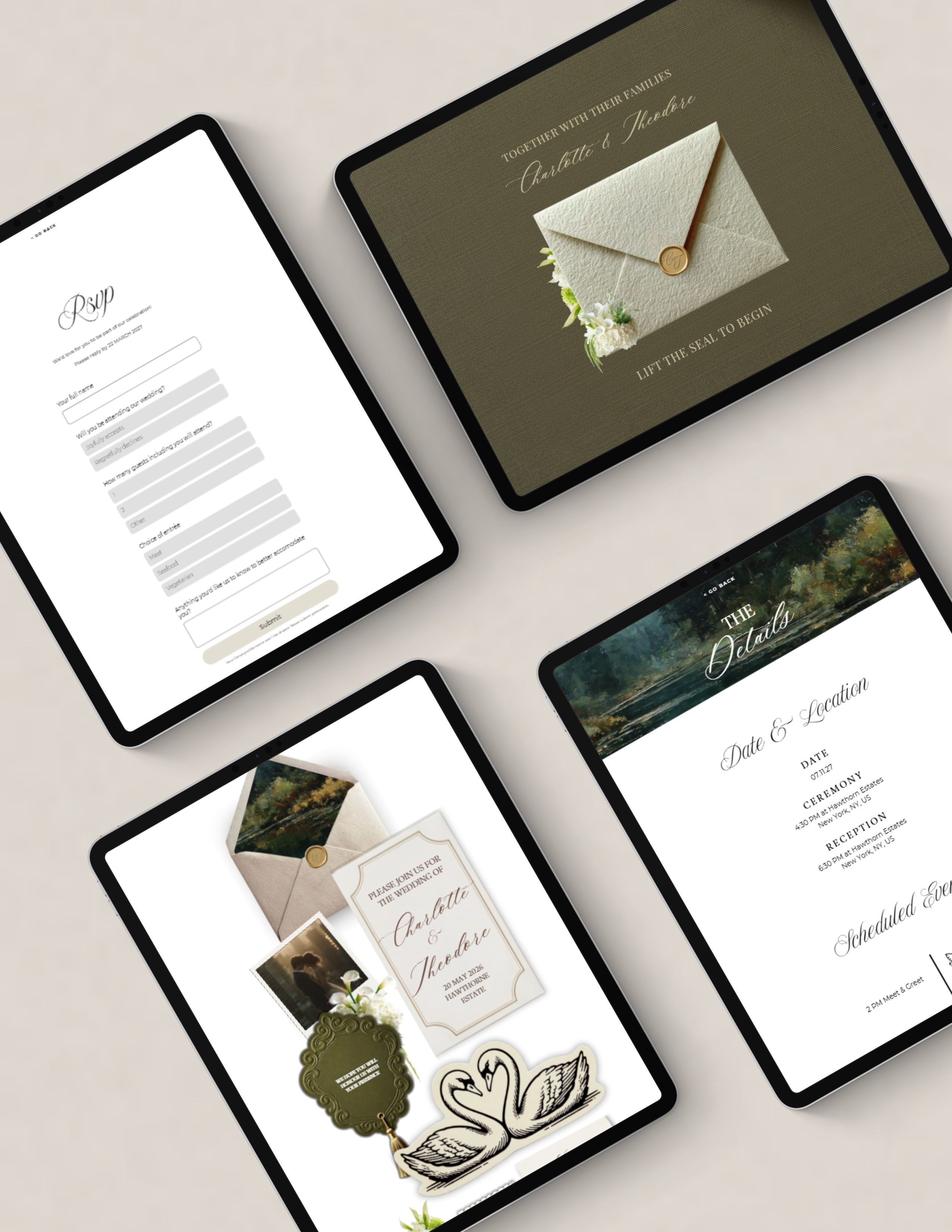
There's sometimes a temptation to skip the wedding website when you're keeping things small. "We'll just text everyone," or "We'll handle it in the invitation." But with a micro wedding, your website isn't just a nice-to-have — it's your central communication hub for a group of people who genuinely matter to you.
The good news is that you don't need to spend hours building something from scratch. A well-designed template gives you a beautiful, organized starting point that you can customize with your specific details, schedule, and wording in an evening. You fill in what's relevant to your wedding, skip what isn't, and you end up with something that feels personal and polished without the design headache.
Browse our templates and find one that matches your style — whether you're going cozy and intimate, elevated and minimal, or somewhere in between. Your guests will appreciate having one place to find everything they need, and you'll appreciate not fielding the same question 25 times in the weeks before your wedding.