Let's talk about something nobody warned you about when you got engaged: the print costs.
Save the dates. Invitations. Inner envelopes, outer envelopes, and the little tissue paper insert that serves absolutely no purpose. Direction cards. Accommodation cards. RSVP cards and their own separate return envelopes. Menu cards. Programs. Seating charts. Welcome signs. Escort cards. Table numbers. Thank you cards.
By the time you add it all up — design fees, printing, postage — couples routinely spend $800 to $2,000 on paper that guests glance at once and leave on the table. Some of it ends up in the trash before the night is even over.
Here's the thing: almost all of it can be replaced by one well-built wedding website. And not in a cheap, corner-cutting way. In a genuinely better, more flexible, more beautiful way that also happens to save you a significant amount of money.
Let's go through it piece by piece.
Save the Dates: A Digital Card and a Link
The save the date's entire job is to put your wedding date on people's calendars before they book a conflicting vacation. That's it. It does not need to be a $4 magnet mailed to 120 people.
A simple digital save the date — sent by email or text, or even posted in a group chat for close family — with your wedding date and a link to your website does exactly the same job. Services like Canva, Papier, and Greenvelope let you design something genuinely beautiful for free or close to it.
Your website handles everything else: the venue, the travel details, the vibe. The save the date just needs to get people to the URL.
Pro tip: Send your digital save the date 6-8 months out for a destination wedding, 4-6 months for a local one. Include your wedding website link front and center — that's the whole point of the message.
Invitations: The One Thing Worth Keeping (If You Want To)
Full transparency here: a physical invitation is the one printed item that still carries genuine meaning for a lot of couples and their families. There's something about holding a beautifully designed envelope that a screen hasn't fully replaced yet.
But if you do send physical invitations, they don't need to include everything anymore. No direction inserts. No accommodation cards. No RSVP card and return envelope. Just the invitation itself — date, time, venue, dress code, and your website URL for everything else.
That single change can cut your invitation suite cost roughly in half. You're printing one card instead of five.
And if you're open to going fully digital? Plenty of modern couples do. A stunning digital invitation designed in Canva and sent by email or text is completely socially acceptable in 2026, especially for guests under 50. Pair it with a link to your wedding website and you've got everything covered in one clean, beautiful package. Your older relatives might grumble briefly and then get over it.
The RSVP Card: Completely Unnecessary
The physical RSVP card — the one you stuff into the envelope with a stamp already on it, hoping guests actually mail it back — has an embarrassingly low return rate and creates weeks of follow-up headaches.
Your wedding website's RSVP form does this better in every possible way. Guests respond in 30 seconds from their phone. You can see exactly who has and hasn't responded. You can collect meal preferences, dietary restrictions, and song requests all in one place.
No stamps. No chasing down responses. No trying to decipher your great-uncle's handwriting.
If you're worried about older guests navigating an online form, just call them directly and enter their RSVP yourself. That takes five minutes and is genuinely easier than waiting for a card in the mail.
Direction and Accommodation Inserts: Your Website Already Has This
Direction cards exist because invitations don't have room for a map and a list of nearby hotels. Your website has unlimited room for all of it.
A dedicated Travel & Stay page on your wedding website can include: the full venue address with an embedded Google Map, parking instructions, public transit options, nearby hotel recommendations at different price points, and any notes about the area guests should know.
That's more useful than any printed insert has ever been — and it's always accessible. Guests can pull it up on their phone in the Uber on the way to your wedding, which is exactly when they need it.
Programs: Replace Them With a QR Code Welcome Sign
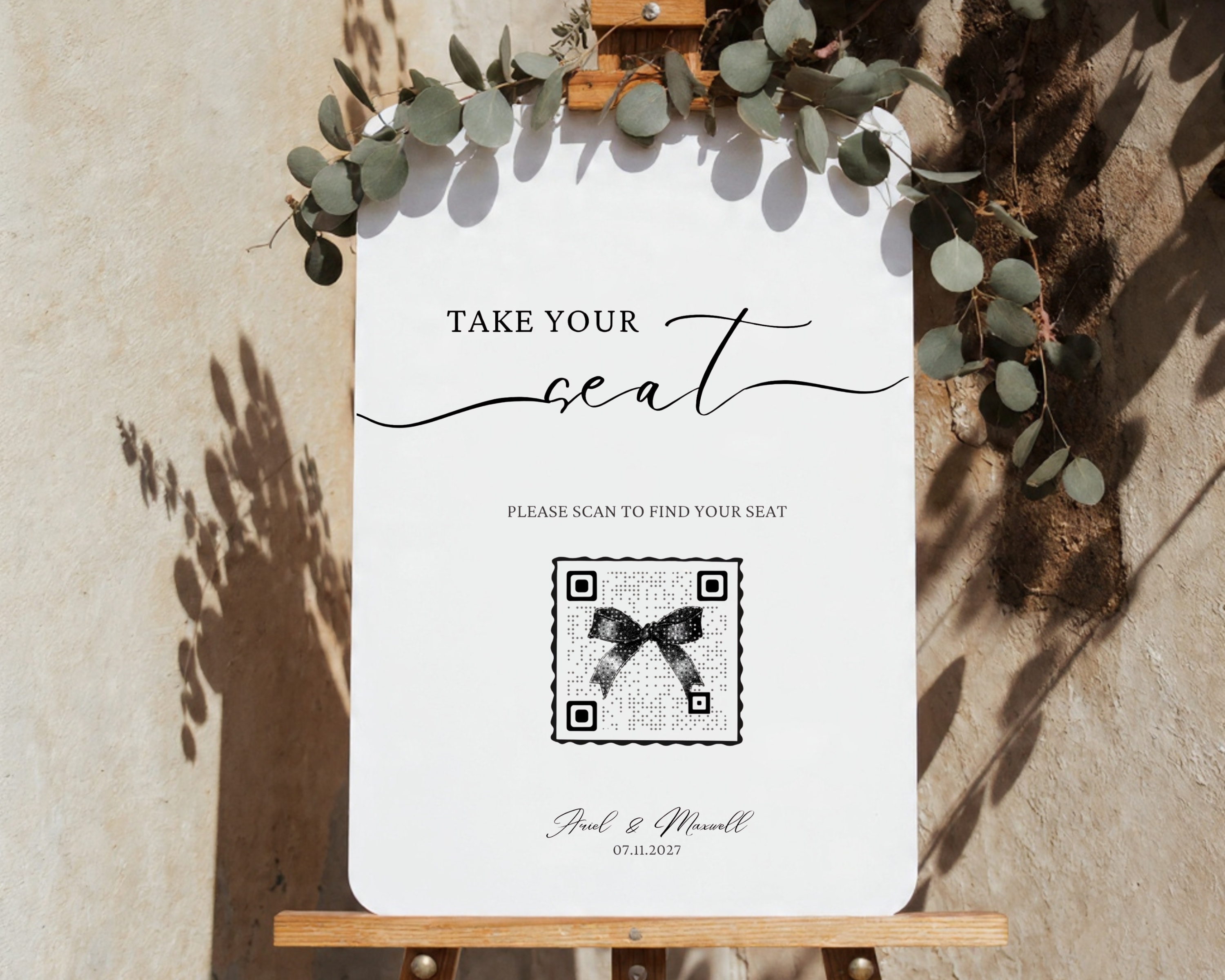
Here's where things get genuinely clever. The traditional wedding program — a tri-fold pamphlet listing the ceremony order, the wedding party, and the readings — costs money to design and print, gets left on chairs, and is outdated the moment anything changes.
Instead: one beautiful welcome sign at the ceremony entrance with a QR code that links directly to a page on your wedding website. Guests scan it as they arrive and have everything on their phone for the whole day.
That page can include your ceremony order and any readings, your wedding party with names and a line about how you know them, a note about whether the ceremony is unplugged, and the flow for the rest of the day. It's more information than a program could ever hold, it's interactive, and it costs nothing to update if something changes the morning of.
Pro tip: Get your QR code printed on your welcome sign through a local print shop or even a well-designed Canva sign you print at home. The sign is one item — beautiful, intentional, and it does the work of an entire stack of programs.
Seating Charts and Escort Cards: The QR Code Page Continues
Traditional seating charts are large, expensive to print beautifully, and create a bottleneck at the venue entrance as guests crowd around trying to find their name. Escort cards — the individual cards directing each guest to their table — take hours to assemble and half of them end up on the floor.
Your wedding website can host a clean, easy-to-read seating chart that guests access through the same QR code. They search for their name, find their table, done. No crowding, no lost cards, no last-minute reprinting when your college roommate adds a plus-one three days before the wedding.
If you love the aesthetic of physical escort cards, keep them — but make them simple name cards on the table rather than a logistical system. Let the website handle the navigation.
Menu Cards: Already on the Website
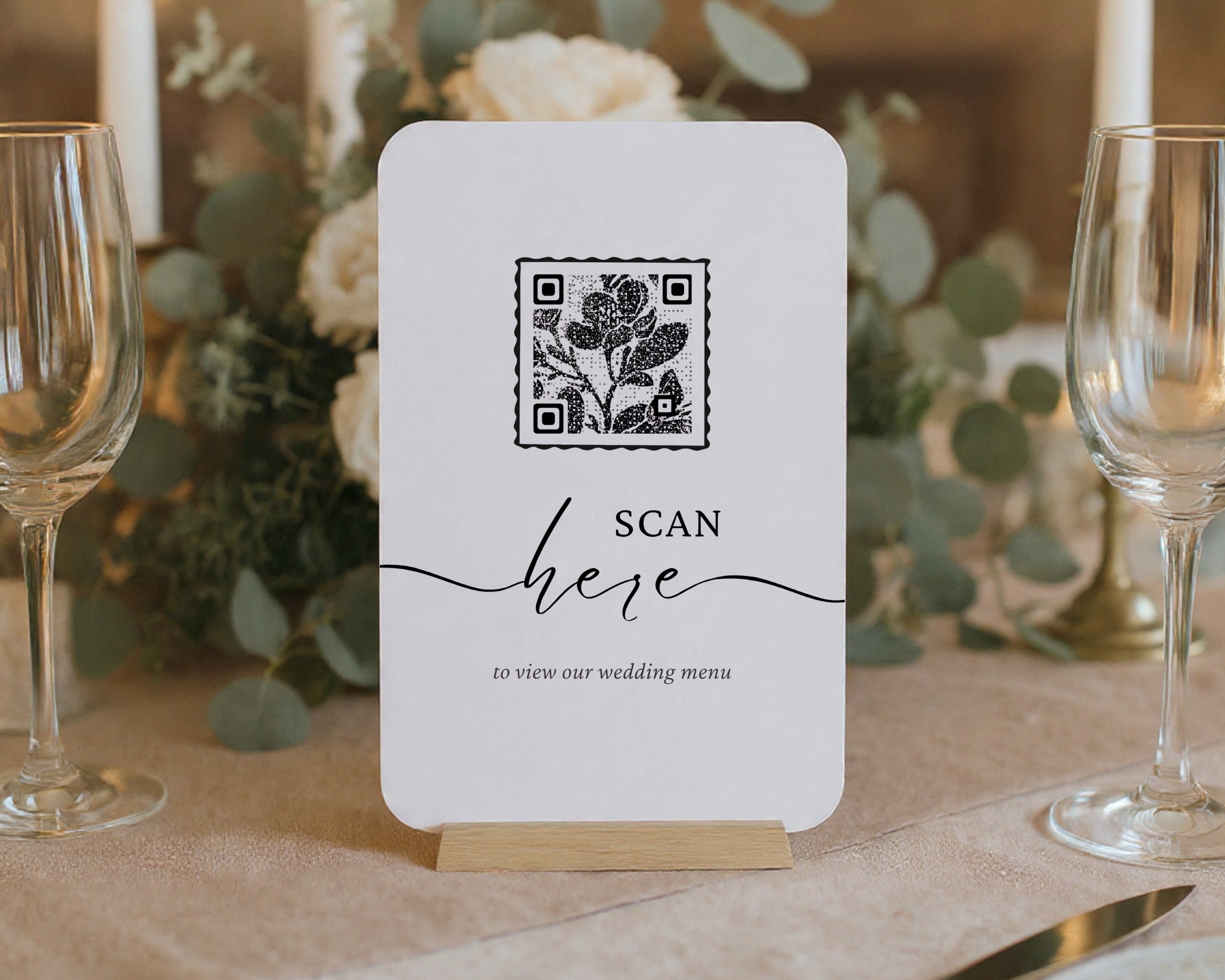
Printed menu cards at each place setting are a lovely touch at a formal dinner — and also $3-5 per guest before you've even started. For 80 guests that's $400 on something people read for two minutes.
Your day-of website page can include the full menu, including notes about which dishes are vegetarian, gluten-free, or contain common allergens. Guests who care about this information — which is actually a meaningful number of people — will appreciate having it accessible without squinting at small print in candlelight.
For couples who still want something physical on the table, a single printed menu card per table (rather than per guest) cuts that cost by 80% instantly.
The Day-Of Page: Your Secret Weapon
Here's the piece that ties everything together. Build a dedicated day-of page on your wedding website — sometimes called a "Wedding Day" or "Day Of" page — that hosts everything your guests need from the moment they arrive until the last song plays.
Think of it as the digital version of the welcome folder you'd find in a hotel room. Everything in one place, easy to navigate, accessible from any phone.
A good day-of page includes: the full event timeline with times and locations, the seating chart, the dinner menu, the wedding party introductions, any special announcements ("The bar closes at 10pm" or "Shuttle pickup is at 11pm from the front entrance"), and even a link to a shared photo album where guests can upload their own pictures throughout the night.
This is the page your QR code welcome sign points to. Guests scan once when they arrive and have everything they need for the entire day. No paper required.
Pro tip: Update this page the week before your wedding with any final details. Moving the cocktail hour inside because of rain? Update the page. Table assignments shifted? Update the page. It takes two minutes and every single guest has the current information automatically.
Thank You Cards: A Post-Wedding Website Page
Most couples send thank you cards 2-3 months after the wedding, which is both expensive and genuinely stressful during what should be a relaxed newlywed period.
Consider adding a post-wedding page to your website instead — or in addition to personal notes for immediate family. A page that goes live after the wedding with your favorite photos, a heartfelt message to your guests, a link to the professional photos when they're ready, and genuine thanks for being part of the day.
It's more personal than a form card, more shareable, and it costs nothing. Guests who care about your relationship will love seeing your wedding photos and a real message from you. And it keeps your website alive and meaningful beyond the day itself.
What This All Adds Up To
Let's be honest about the math. A full traditional print suite — save the dates, invitations with all inserts, programs, seating chart, escort cards, menu cards, and thank you cards — can easily run $1,500 to $3,000 for an average-sized wedding once you factor in design, printing, and postage.
A wedding website costs a fraction of that. And it does more. It's searchable, updatable, accessible on any device, and doesn't end up in a recycling bin by 9pm.
The QR code welcome sign approach especially is something more and more couples are doing — not because it's a budget hack, but because it genuinely works better. Guests have their phones. Meeting them where they already are just makes sense.
If you're building your wedding website and want something that looks beautiful without spending hours on design, our templates give you a ready-made structure for every page we covered here — including the day-of page. Browse our collection and you could have the whole thing live by tonight.